



Flammenfresser
Der Flammenfresser der auch Vakuummotor genannt wird, gehört zu den Heißluftmotoren. Der Flammenfresser verfügt im Vergleich zum Stirlingmotor nicht über ein geschlossenes, sondern über ein offenes System. Bei jedem Hub strömt neue Luft in den Zylinder. Es gibt liegende, stehende und Flammenfresser mit gegenläufigen Kolben. Die Kraft des Flammenfressers ist auf den Druck der Atmosphäre auf den Kolben begrenzt, darum wird der Flammenfresser auch atmosphärischen Motor genannt.
Der Arbeitsablauf von einem Flammenfresser funktioniert wie folgt:
- - Die Brennerflamme wird durch den nach hinten laufenden Kolben eingezogen.
- - 15° vor erreichen des hinteren Totpunktes schließt das Einlassventil.
- - In dem geschossen Zylinder kühlt die heiße Luft ab und zieht sich zusammen.
- - Die zusammenziehende Luft bildet fast ein Vakuum.
- - Jetzt ist der Atmosphärische Druck hoher als der im Zylinder. So das der Umgebungsluftdruck den Kolben nach vorne schieben kann.
- - Die noch im Zylinder vorhandene Luft wird über das Auslaßventil ausgedrückt.
- - Wenn der Kolben den vorderen Totpunkt erreicht öffnet das Einlassventil.
- - Jetzt beginnt die Arbeitsfolge von dem Flammenfresser von vorne.
Für einen Flammenfresser ist es wichtig das die Wärme, die der heißen Brennerluft entzogen wird abgeführt werden kann. Entweder der Motor ist Luftgekühlt und hat Kühlrippen oder er ist Wassergekühlt und die Wärme wird am das Kühlwasser abgegeben. Das Heiße Kühlwasser muss dann entweder über einen Verdampfer oder einen Kühler gekühlt werden. Die Öffnungszeiten vom Einlassventil wird gesteuert durch einen Excenter. Auf Grund der sehr geringen Leistung wurden Flammenfresser nur selten außerhalb des Modellbaus eingesetzt. Die Anwendungsbereiche im Modellbau sind dafür umso kreativer. Sie werden als Stationärmaschinen oder zum antreiben von Traktor Modellen oder Modellbauschienenfahrzeugen benutzt. Modellbauer können sich einen Flammenfresser nach Bauplan selber bauen es gibt natürlich auch gute Bausätze und Fertigmodelle. Der Betrieb dieser Maschinen ist nicht ganz so einfach, hier finden Sie Tipps und Tricks falls Ihr Motor nicht läuft. Der Flammenfresser, auch Vakuummotoren genannt und Stirlingmotoren sind nicht wie zum Beispiel eine 2 Zylinder Dampfmaschine selbst anlaufend.
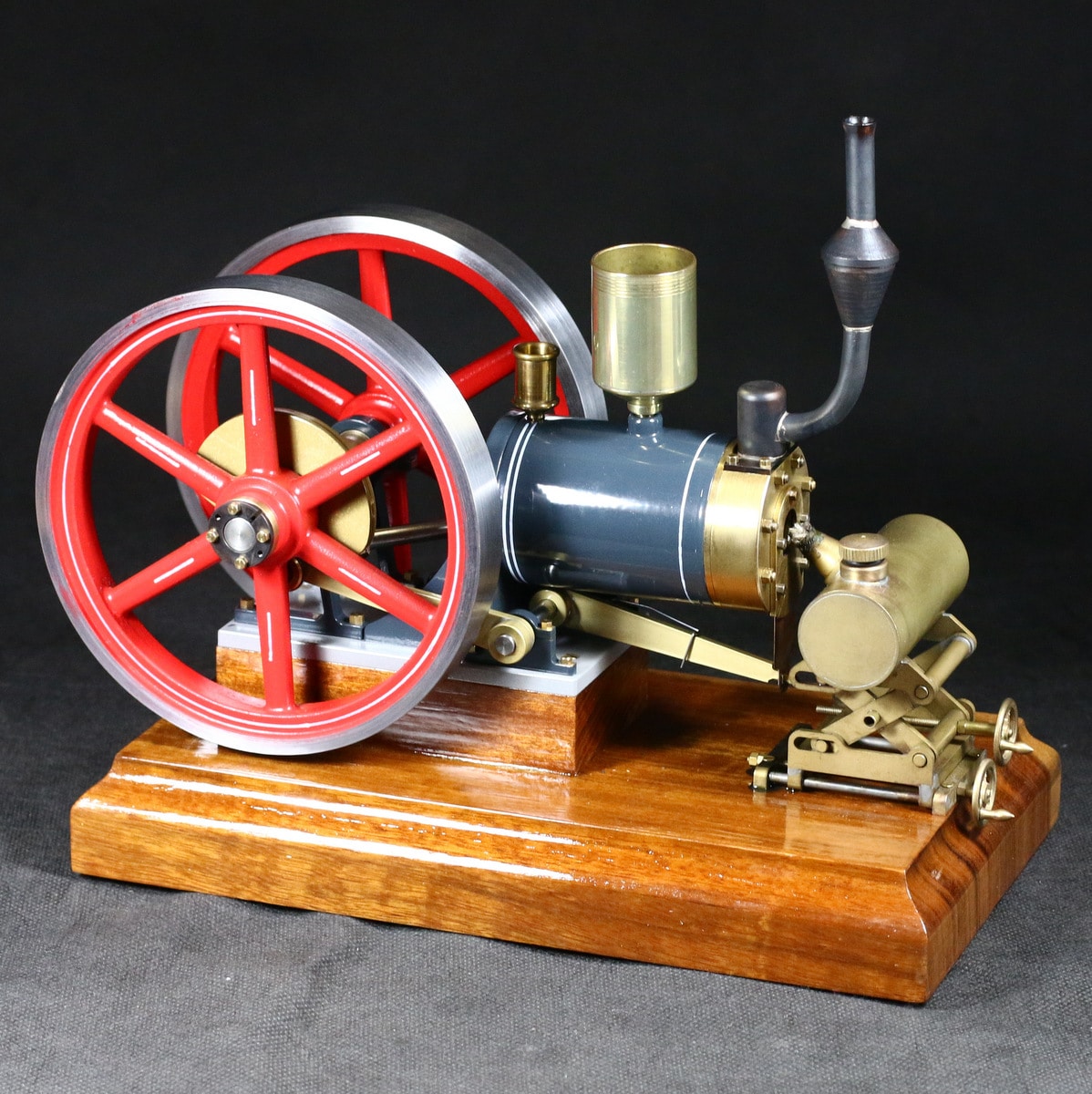
The vacuum motor or flame licker 'The large Nick' mainly consists of brass. It possesses water-cooling with an evaporator container. The flywheels are made of cast iron. The large Nick is mounted onto a Jatoba wood plate. The crankshaft and the slide shaft have ball bearings. It runs at approx. 200-300 rpm. The burner is adjustable in height, so that the speed can be regulated over the handhweel. In addition, the distance from the flame to the cylinder head can be adjusted over a handwheel. All milled parts have already been processed and must be partially drilled yet. All rotating parts are yet to be filmed in its raw state and need. The construction of the fire-eater and the burner necessary materials, screws, ball bearings and spring elements are included in the kit. All necessary materials for the construction of fire-eater (screws and spring elements) are included in the kit. The construction of the fire-eater, a medium sized lathe (minimum quantum D is x 250 400), a drill and a gas burner required for soldering larger parts and a torch for brazing small parts. Otherwise, are still hand tools, which should be in every "steam engine workshop" (Taps M2, M3, M4, M8x0, 75 cutting dies M3, M4, M8x0, 75 Reamer 3H7, 6H7, 10H7, files, drill bit) needed. If you have any tools for making the flame-eater, "The Big Nick" need, simply click the required items and you will be automatically redirected. Dimensions flame eater The big Nick Length: 260mm Width: 150mm Height: 240mm Flywheel D.: 140mm D. Piston: 26mm Stroke: 46mm The delivery volume consists of: Finish-machined milled Raw material for the rotating parts Cast iron flywheels Milled-wood base All necessary screws, nuts, ball bearings and spring elements Blueprint flamelickers Drawings (8 sheets) and instructions (6 sheets) Burner blueprint drawings (3 sheets) and instructions (2 sheets) Large burner kit 2-axis adjustable
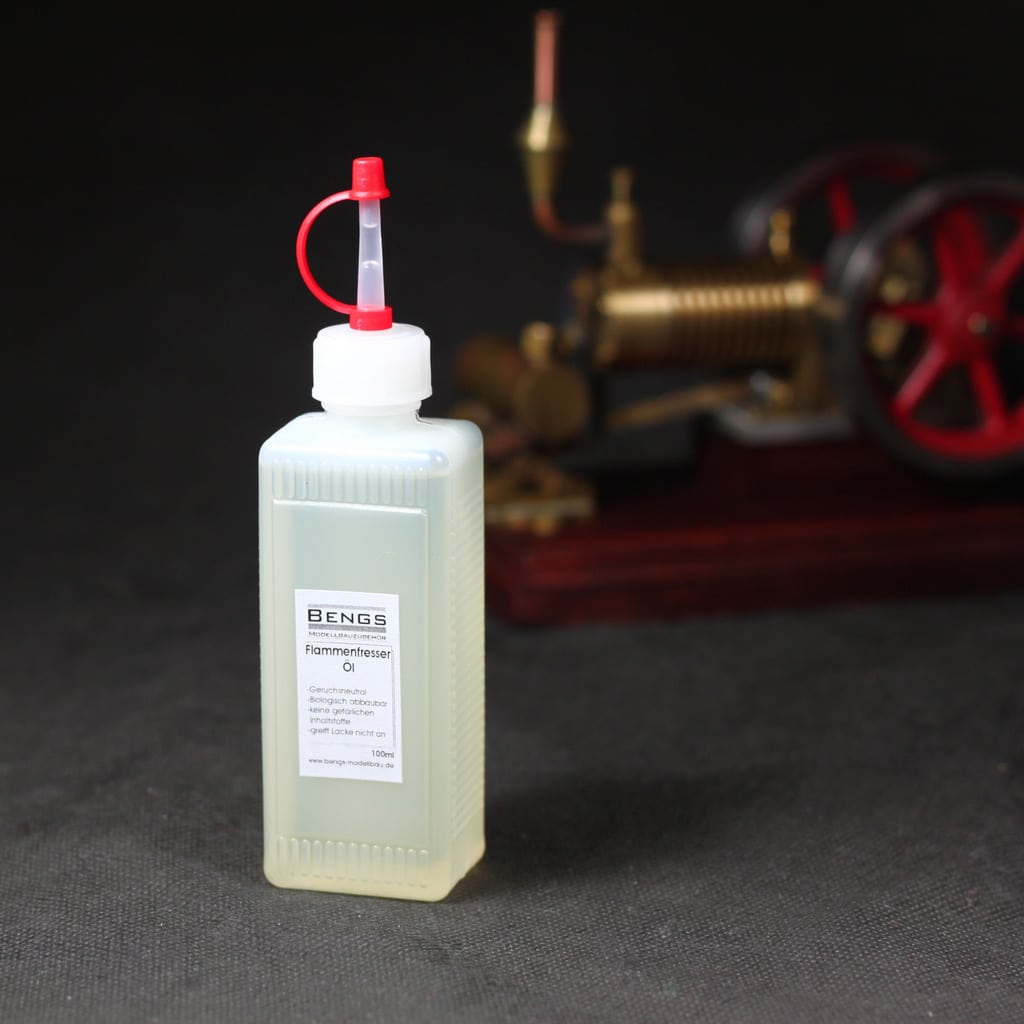
The Flame eater oil from Bengs Modellbau is particularly suitable for lubricating the pistons and cylinders of flame-eaters in technical model construction. The flame-eater oil is an oil, based on white oil. It is liquid as water, odorless and biodegradable. Another important advantage of our Flame-eater oil for use in technical model construction is that it does not attack paints and varnishes. When the flame eater or parts of the flame eater exceed the temperatures of 150 ° C, the flame-eater evaporates and produces a beautiful white smoke. The oil we offer is normally used in the aircraft RC model building as smoke oil. Many oils leave behind residues in the hot vacuum engine, which cause the piston to run smoothly in the cylinder. Likewise, when lubricating with graphite powder, deposits of graphite dust are produced over time, which lead to the piston becoming dull. These residues must be removed from time to time. For a long time we asked ourselves: Which oil is best used for a flame eater or vacuum motor? And here is finally the solution! Flame eater oil from Bengs Modellbau. With the oil from Bengs Modellbau you do not have the described disadvantages and also the following advantages: Flame eater oil is liquid like water Odor neutral biodegradable It does not attack lacquers Best suited for technical modeling Made in Germany No dangerous good according to UN, IMO, ADR / RID, IATA / ICAO. Contains: 100ml E-mail of a satisfied customer: I have today the Flammenfresseröl from you for my Stirlingmotor tried. Until now, I have oiled the model engines with WD 40. But the oil of you is a show! The high speeds I got with it are not comparable with WD 40. And all without residue and no hardening. Simply super! Best regards Video Flame eater oil
Content: 0.1 Liter (€61.00 / 1 Liter)
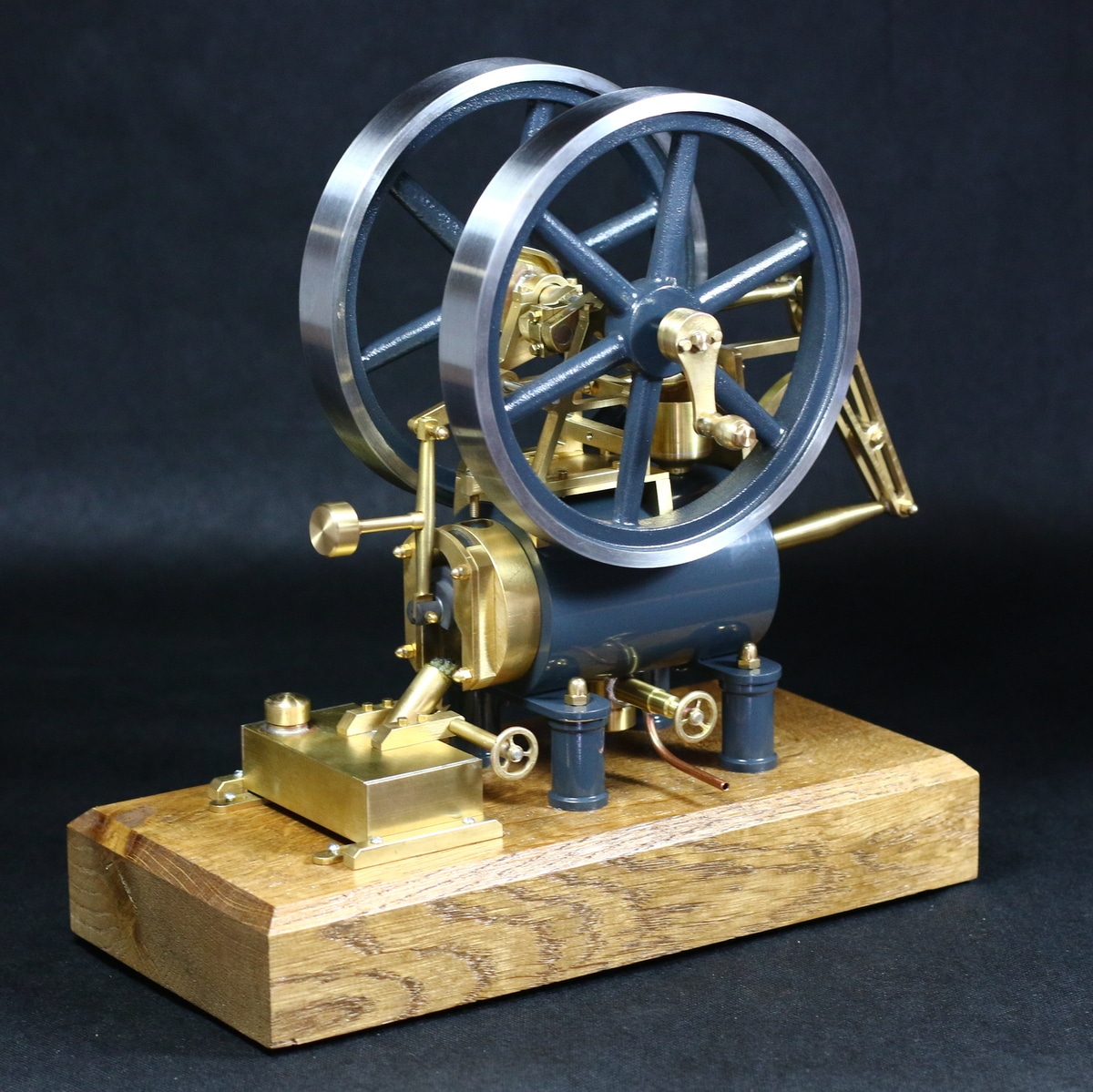
The Flame Eater Jarne has a crankshaft mounted on the cylinder. The force of the piston is transmitted via a beam to the crankshaft above. It has a wet cylinder sleeve and can be cooled with water. This flame eater was based on a flame eater by Armin de Vries, who offered a set of cast parts some time ago. The flywheels of this model have a diameter of 140 mm. The cylinder's cooling jacket is made of aluminum and has a diameter of 60 mm. The cylinder sleeve is already finished on the inside. It just needs to be edited on the outside. The piston material for this model is gray cast iron round material. Graphite is used for the slider in this flame eater model. Most of the parts used in the model flame eater are made of brass. An oak base plate is also included. To build the material kit for the flame eater "Jarne", a medium lathe is required. You will also need a small pillar drill and a torch for soft soldering. Furthermore, hand tools (tap M2, M3, M4, M8x0.75 / cutting die M2, M3, M4, M8x0.75, / reamers 3H7, 4H7, 6H7, / files, drill set) are also necessary.Dimensions Flame Eater “Jarne”: Length: 260mm Width: 120mm Height: 260mm Flywheel D.: 140mm Piston D.: 30mm Stroke: 58mm Included in the delivery are: Finished milled parts Raw material for the turned parts Graphite round material for the slider 140mm cast steel flywheels Wooden base plate made of oak All required screws, nuts, ball bearings and spring elements Construction plan flame eater drawings (8 sheets) and construction instructions (6 sheets) Further information with lots of pictures and explanatory texts about building this flame eater can be found in our model building magazine. This means you can find out about the construction in advance as well as find suggestions and support during the construction phase. Jarne construction report in Bengs Modellbau magazine
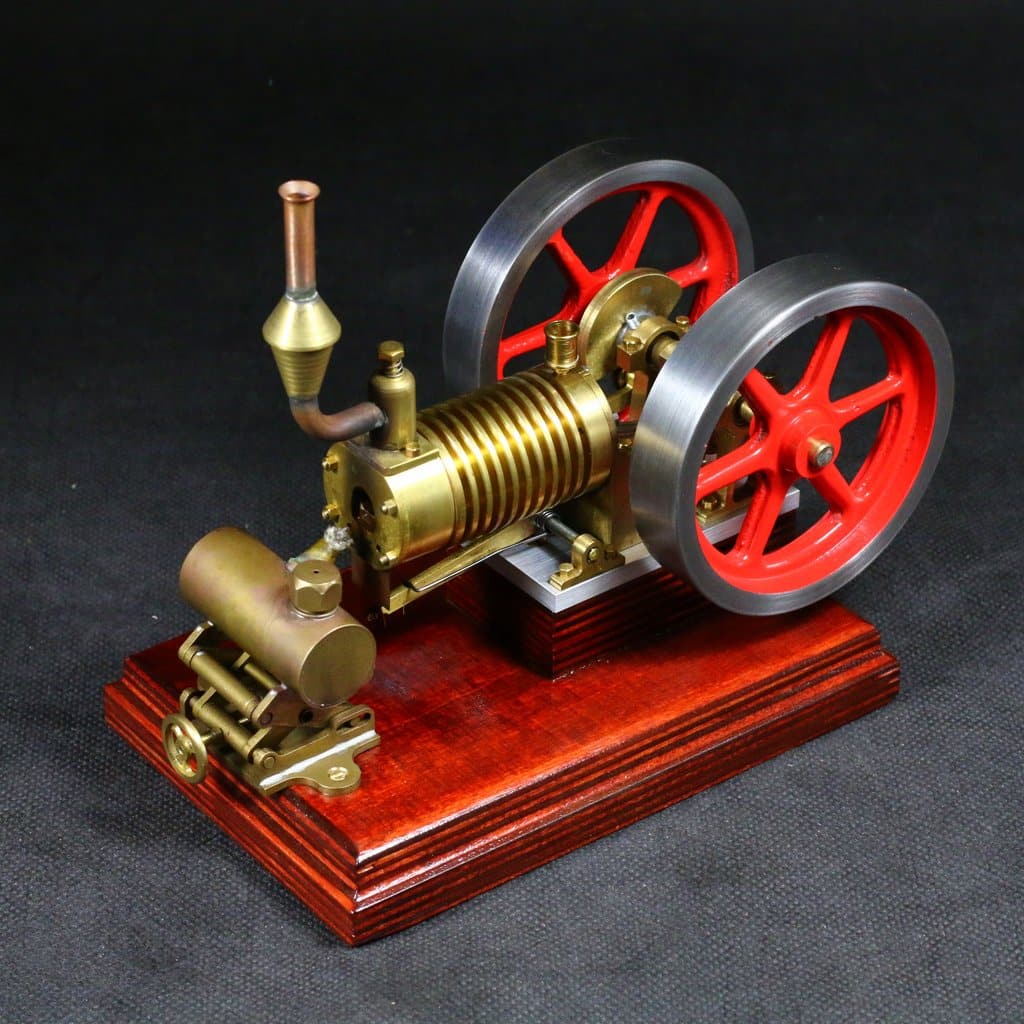
The vacuum motor or flame eater 'Nick' is mostly made of brass. The flywheels are made of cast steel. 'Nick' is mounted on a varnished wooden panel. The crankshaft has ball bearings. It runs at around 200-400 rpm. The burner is height adjustable so that the speed can be regulated using the handwheel. The flame eater needs a few minutes to reach operating temperature. It can then be started with a gentle push on the flywheel. Once it is in operation, it runs for many minutes with a beautiful sound. All milled parts have already been machined and some still need to be drilled. The materials, screws, ball bearings and spring elements required to build the flame eater and burner are included in the kit. To build the flame eater you need a small lathe, a small drill, as well as a gas burner for soldering larger parts and a burner for brazing small parts. Otherwise, hand tools, which should be in every “steam engine workshop”, are necessary (tap M2, M3, M8x0.75, cutting die M3 and M8x0.75, reamer 3H7, 4H7, 6H7, files, drill set). Would you like to see in advance what work is still being carried out? Then take a look at the construction report from the flame eater “Nick” in our Bengs model building magazine. Here you will find many pictures and small explanatory texts about what needs to be taken into account during construction. This construction report can certainly provide you with additional support during the construction phase.Dimensions of the “Nick” flame eater with base plate Length: 170mm Width: 100mm Height: 110mm Flywheel D.: 80mm Piston D.: 16mm Stroke: 26mm The Flame Eater Nick material kit includes: Finished milled parts Raw material for the turned parts Two 80mm flywheels made of cast steel Milled wooden base plate made of oak All required screws, nuts, ball bearings and spring elements Construction plan flame eater drawings (9 sheets) and construction instructions (6 sheets) Construction plan burner drawings (3 sheets) and construction instructions (2 sheets) Kit for the burner, height adjustable If you ever need a spare part, you are of course welcome to order it from us.